A New way to Fund Cohousing
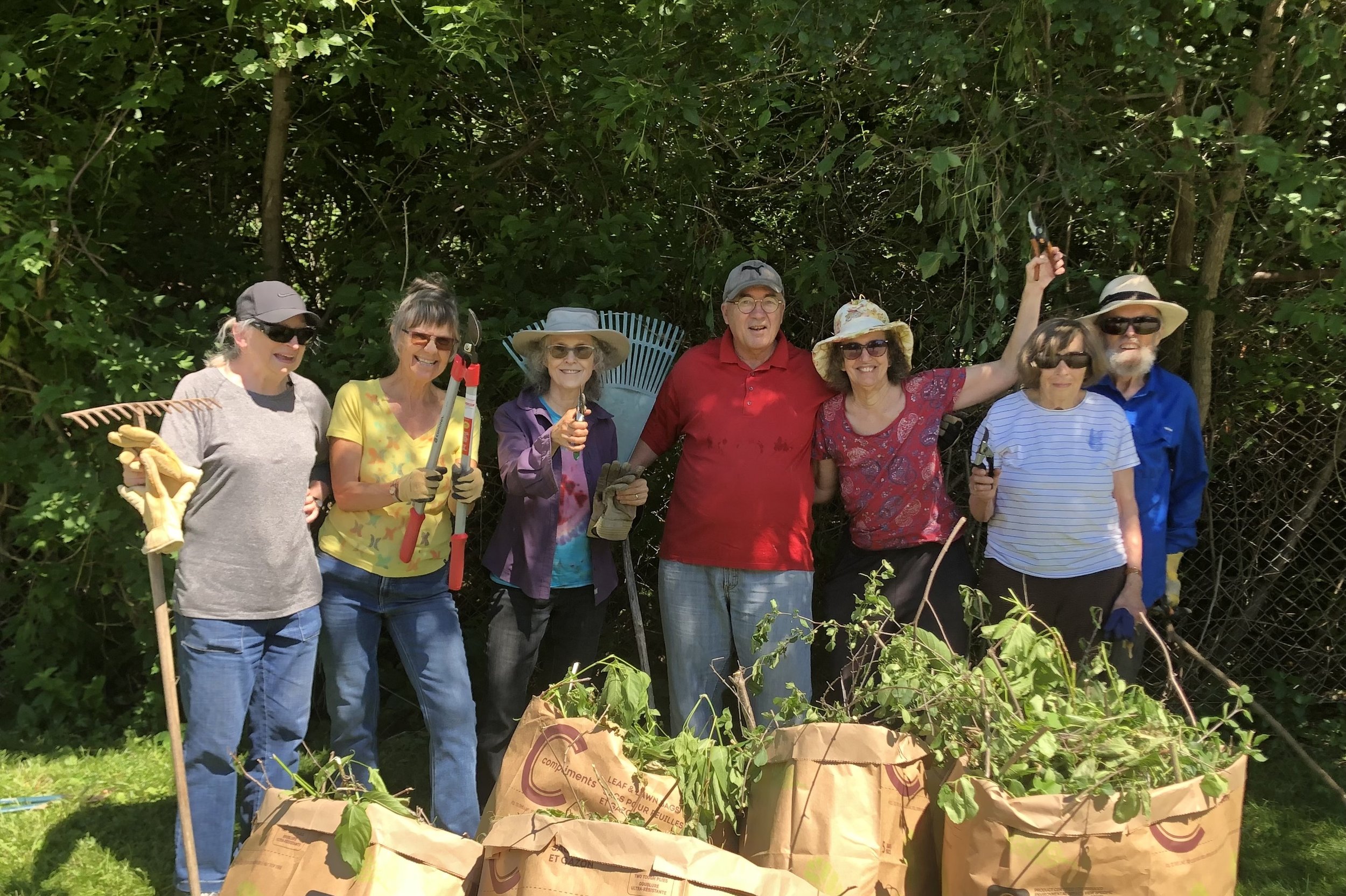
Cleaning up the property at 736 Maryland Avenue
1. UPDATE ON THE SITE, THE BUILDING AND FUNDING APPLICATIONS
Our apologies for the long silence…
We have been quiet for way too long, mainly because we haven’t had anything exciting to report, and it always seemed that something major might be just around the corner. We have spent quite a lot of time attempting to find government funding for our project, looking for assistance in making much-needed housing that is sustainable, affordable and socially supportive. We haven’t been successful in that effort.
Various Canada Mortgage and Housing Corporation (CMHC) and Federation of Canadian Municipalities (FCM) programs have run out of funding, shut down, or established rules that eliminated us from consideration. Build Canada Homes (BCH) holds much promise, but currently appears to be focused on funding really large projects (200-plus units), and isn’t moving as quickly as had been hoped. An affordable housing consultant we spoke to said that this was the worst funding environment he has experienced in his many decades of working in the sector. While we continue to work with advisors on obtaining funding from various levels of government, we are no longer making that our main focus.
So we are, once again, pivoting. As we tried to qualify for various programs, we reworked our plans and twisted our vision to fit what seemed to be fundable. Now, we have taken a step back. We’ve reduced our number of units to 35, and dropped our building height to 3 storeys. This allows us to take advantage of some differences in building code that can reduce our costs. We’ve made other changes to our design to reduce costs, while still maintaining our goal of including lots of common space for people to gather and interact. We’re excited to share our new design with you, which should be ready by the end of August.
Once we have the new design, and have updated our cost estimates based on that design, we will be moving forward to finalize site plan approval with the City of Peterborough. Our site at 736 Maryland Avenue has been rezoned for multiresidential use, and we have been through the preliminary phases of site plan approval. Once site approval is completed, the path is cleared for us to move forward to actual construction.
We’ve also spent a great deal of time thinking about other ways to achieve our goal of offering housing that is affordable for a range of financial situations. We are now moving forward with exploring a new ownership model called a Mutual Home Ownership Society (MHOS), based on a UK model of the same name created by LILAC Cohousing back in 2013. We learned about this model from Killick Ecovillage, a cohousing group in Portugal Cove, Newfoundland, who have introduced the concept to Canada. We are very grateful to Killick Ecovillage for their support, guidance, and huge database of information about MHOS.
In this model, run as a co-op, monthly fees for all residents are capped at 30-35% of household income so that the cost to live in these high-quality, sustainable homes is always affordable, regardless of family structure, life changes, or income level.
In the MHOS model, a portion of each month’s fee, along with an initial minimum downpayment, is taken as a loan to the co-op, which is then due back to the member when they leave. At some point, when the member has contributed a maximum loan amount (tied to the value of their home in the community), they no longer have to pay the loan portion each month, making their fees even lower. Some members will choose to pay the full amount of their loan up front, and will only pay operating costs on a monthly basis. This hybrid model gives our members the flexibility to pay off their homes when it makes sense for them.
The goal of MHOS is to attract people of many income levels and at all stages of life, fostering a shared sense of ownership, belonging, mutual support and sustainable living that is accessible and feels fair to everyone.
From LILAC: “A Mutual Home Ownership Scheme is a new way of owning a stake in the housing market. It is designed to bring the bottom rung of the property ladder back within reach of households on modest incomes in areas where they are priced out of the housing market. It is designed to remain permanently affordable for future generations. Members of the society are the residents who live in the homes it provides. The society and not the individuals obtain the mortgage and so borrowing is cheaper.”
There’s a lot more to say about this, and we are working hard to put together information to share with everyone who is interested. If you think you would like to learn more about this new direction, our current design, how MHOS works, and how to join us in making this happen, we would love to see you at one of our online information sessions. We will be holding these again starting in the fall, and will be inviting people to join us as Explorer members.
Whether you have been on our mailing list for years, have just signed up because you are curious about cohousing in Peterborough, have come to some of our sessions before, or have just wondered what we are all about, please join us as we move forward.
We’ll announce the dates of our information sessions in our next newsletter, but if you would like to be contacted directly when we have our schedule, please sign up here.
2. GETTING TO KNOW OUR PETERBOROUGH

The Peterborough Field Naturalists (PFN) is a registered charity and active club in Peterborough, Ontario Canada that has been operational since 1940. Its 300 members are striving to create an engaged community that is inspired to learn about, appreciate, and conserve nature in all its forms. Its mission is to instill in its members and the broader community the fundamental importance and value of the natural environment. PFN achieves this primarily through nature outings, guest speakers at monthly member meetings, special events, advocacy, community outreach and the Orchid Newsletter. PFN welcomes everyone who is curious and wants to share and learn together about nature.
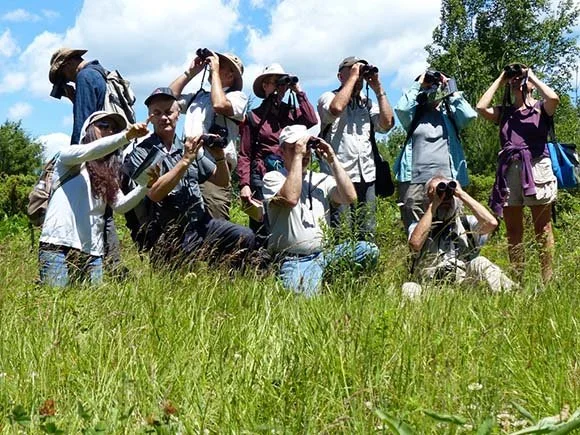
PFN celebrated the arrival of spring by hosting the “Return of the Birds Weekend.” They welcomed the whole community to join their knowledgeable volunteers on the docks at the Canadian Canoe Museum and the Mark Street Boat Launch to experience the migrating birds that stop over on Little Lake. Visitors could look through birding scopes to get a close look at the birds in their beautiful mating plumage and also visit a PFN display as well as mounted bird specimens prepared by our local taxidermist Ken Morrison.
Many outings are held throughout the year as PFN welcomes butterfly season, enjoys the Sounds of Spring by listening to frogs and the American Woodcock at Cavan Swamp, observes Early Spring Migrants and participates in a Nephton Mines Hawkwatch.
Learn more about the Peterborough Field Naturalists by visiting their website at www.peterboroughnature.org

Ring-necked ducks on Little Lake, Peterborough, March 29, 2026 (photo by Lou Smylis)
3. OTHER KCC NEWS
We hold Super Weekends four times a year. These give an opportunity for us all to get to know each other better and for those who don’t live in Peterborough it’s an opportunity to come for the weekend. The Super Weekend of July 17-18 was small as many of people were away on vacation, but those of us who were around, had a lovely time at Jane’s Cottage on an island half hour north of Peterborough.

Hanging out at Jane’s cottage outdoors and indoors (it was a rainy weekend)


Jane ferried us back to the mainland at the end of the day
We love meeting those who are interested in our community
We hold monthly casual get-togethers at the Silver Bean Cafe at Millennium Park in the summer and at the Canoe Museum in the winter, on the third Wednesday of every month at 11am. You are most welcome to come and join us. If you would prefer to just meet for coffee with one of our members, drop us a line and we will set something up.
What attracts me to cohousing, by Jennifer Jeffery
I think cohousing works well for everyone.
When I first joined KCC, I heard many members share how they loved living in residence when enrolled in college or university. I hated it! I shared a small room with only enough space for two single beds, two small desks, two tiny closets, and a one-meter-wide space down the middle. It felt like there was nowhere I could go to be alone. I struggled that entire first year at the University of Guelph and never want to experience that again. But cohousing is different. You have your own home with a kitchen, bathroom, bedroom. I will have that private space to retreat to whenever I want.
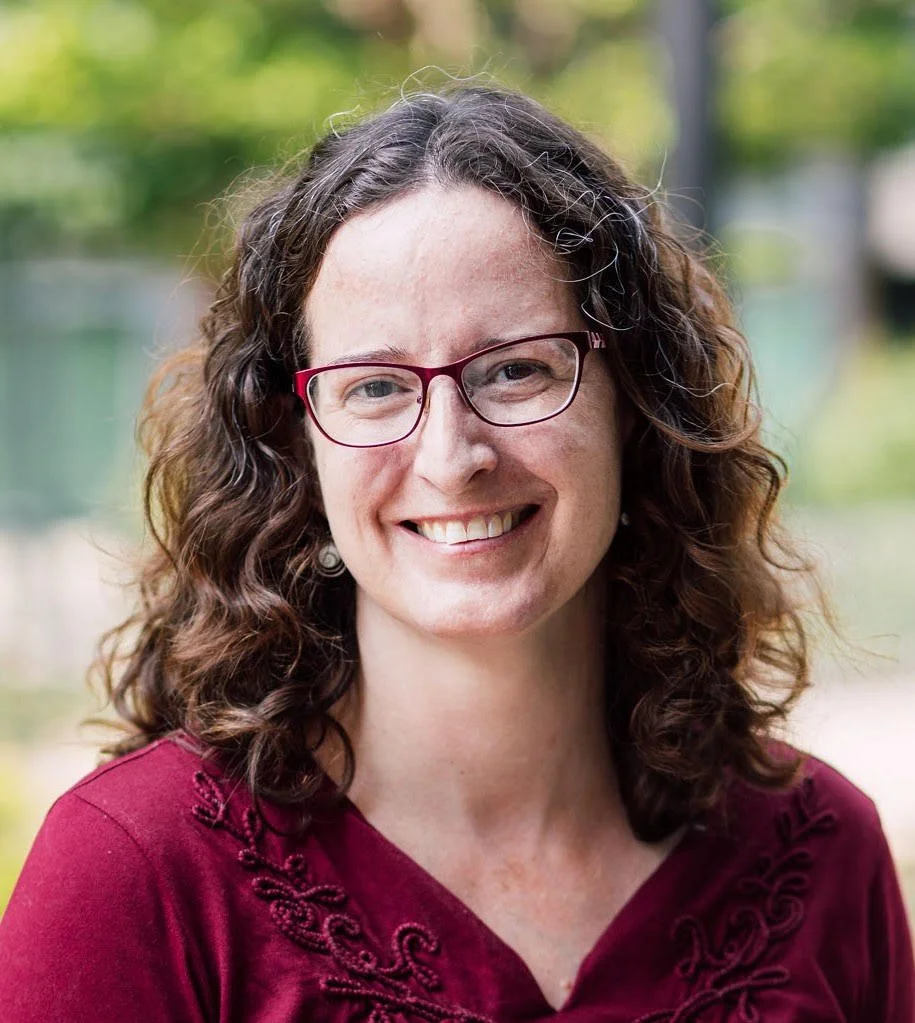
Other members have mentioned how they miss the constant interactions they had as they grew up in a large family home with many siblings, cousins, and close family friends. I can’t even imagine! I have one older brother and we grew up in a military family. We moved 11 times before I left home for university and we weren’t in any place long enough to establish lasting friendships. But KCC is different. I don’t even live in Peterborough yet but I have made good friends over the five years since I joined the community and I have no doubt that we will remain close for decades to come.
Over time, I realized the reasons I am attracted to cohousing were shared by other KCC members - they just aren’t always the ones that come first to mind for them. Or in some cases, they were less ready to share these reasons, or used language that I didn’t quite understand to explain them.
I am a complete introvert. That doesn’t mean I’m shy or antisocial. It just means that being around other people does not invigorate me like it does an extrovert. I need lots of alone time to recharge my batteries. But as someone who lives alone, the reduced drive to socialize can often lead to me self-isolating. I can go weeks, sometimes months, without seeing anyone in my terrific network of friends and family.
It turns out that many other KCC members are introverts. Often they form a family unit with an extrovert but not always. Cohousing suits both personality types. For the extrovert, there will always be other people around to chat with (and to give their introvert partner a break!). And for us introverts, living in community makes it easy to socialize when you feel like it but to quietly disengage when you’ve had enough (without dragging your extrovert partner home with you!).
Personality type is just one of many lenses you can use to see how cohousing would work well for you. It works equally well, just in different ways, for a young mother and for an elderly widow; for a teenager at school and for a middle-aged professional. Just come to KCC’s next event and we’ll fill you in on all the various benefits. I hope to meet you there!
Please consider attending an information session to see if this might be right for you.